Moving Out With Pets: Seattle Rental Cleaning and Damage Checklist
Pet hair, urine odor, carpet, scratches, and yard cleanup before you leave a Seattle rental, with Washington's carpet rule and a room-by-room pet checklist.
The short answer
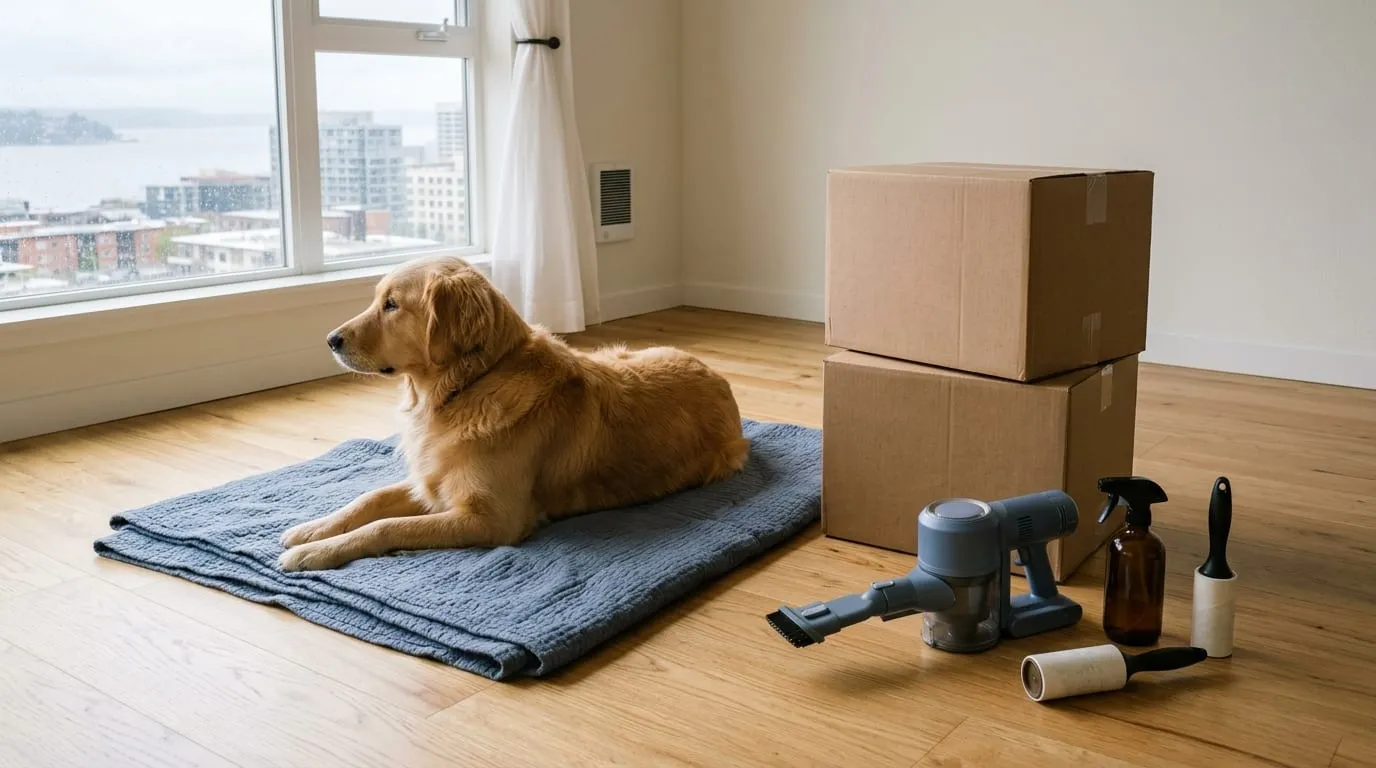
Before you hand back the keys, remove pet hair from every surface (including vents, baseboards, and closets), treat urine spots with an enzymatic cleaner and never with steam or heat, clear the yard and litter areas, and photograph everything against your move-in checklist. Washington law bars deposit deductions for wear resulting from ordinary use, and for carpet cleaning unless the landlord documents carpet wear beyond it, but pet damage beyond ordinary use can still be charged.
- Pet hair hides in places a normal clean skips: heat registers, baseboard tops, closet corners, window tracks, and under appliances. Vacuum top to bottom and finish with a damp microfiber wipe.
- For urine spots, the Carpet and Rug Institute says not to use a steam cleaner, because heat sets the stain and the smell. Extract, rinse with cool water, and use an enzymatic cleaner made for pet accidents.
- RCW 59.18.280 bars deductions for carpet cleaning unless the landlord documents carpet wear beyond wear resulting from ordinary use. Pet stains, odor, and chewing can be that kind of documented wear.
- The statute gives a standard, not a list: whether a scratch is ordinary wear or damage depends on the unit, its move-in checklist, and the facts.
- Scoop the yard, empty and remove litter boxes, and photograph every room, including floors and door bottoms, with the move-in checklist beside you.
This checklist is for Seattle renters with a dog, cat, or other pet who are about to hand back the keys. In short: remove pet hair from every surface, treat urine spots with an enzymatic cleaner and never with steam or heat, clean up the yard and litter areas, and document every room against your move-in checklist. Washington law protects you from charges for wear resulting from ordinary use and limits carpet cleaning charges, but damage a pet caused beyond ordinary use can still come out of a deposit. Nothing here can guarantee a deposit outcome; it can make sure your pet is not the reason for a reasonable dispute.
Use it on top of the general Seattle apartment move-out cleaning checklist, which covers the kitchen, bathrooms, and appliances. This page covers only what a pet adds. For everyday pet cleaning while you still live there, the Seattle Cleaning Guide’s cleaning with pets in a wet climate is the better read.
What Washington law says about pets, carpet, and deposits
Chapter 59.18 RCW, the Residential Landlord-Tenant Act, has no pet-specific move-out rules. The general rules apply, and a few of them matter more when a pet lived in the unit. This is general information, not legal advice.
- The baseline is move-in condition. Under RCW 59.18.130, when the tenancy ends the tenant must “restore the premises to their initial condition except for wear resulting from ordinary use of the premises.” The record of initial condition is the move-in checklist that RCW 59.18.260 requires, which must specifically describe walls, carpets and other flooring, furniture, and appliances.
- No deduction for ordinary wear. RCW 59.18.280 says no portion of a deposit may be withheld for wear resulting from ordinary use of the premises.
- The carpet rule. The same section says no portion may be withheld “for carpet cleaning unless the landlord documents wear to the carpet that is beyond wear resulting from ordinary use of the premises.” A routine carpet clean between tenants is not chargeable on its own. A pet urine stain or chewed corner that the landlord documents is a different question.
- Partial damage, partial charge. RCW 59.18.280 also says a charge cannot exceed the cost to repair or replace the damaged portion when the damage does not cover the whole item. One stained section of carpet does not on its own justify replacing all of it.
- Undocumented items. No deduction may be taken for repair or replacement of fixtures, equipment, appliances, and furnishings whose condition was not reasonably documented in the move-in checklist.
Pet deposits and pet fees
Washington law treats money according to what the lease says it is. RCW 59.18.285 says nonrefundable money may not be called a deposit, and a fee is nonrefundable only if a written rental agreement clearly says so; otherwise it is treated as refundable. So a “pet deposit” is a deposit, handled under the same 30-day statement rules as your security deposit, while a clearly written “nonrefundable pet fee” is not coming back.
Inside Seattle, the City of Seattle’s move-in costs page says a pet deposit of 25 percent of one month’s rent can be charged in addition to the security deposit and fees. That is the City’s guidance for Seattle rentals. Pull out your lease and receipt before moving day so you know what you paid and what it was called.
For the full picture of deposits and deductions, see Washington security deposit rules and what landlords can and cannot deduct.
Pet hair in an empty unit
Pet hair is easy to miss while furniture is in place and obvious once the rooms are bare. It also carries allergens. The Asthma and Allergy Foundation of America says people with pet allergies react to proteins in dander, saliva, and urine, that the hair collects the dander, and that pet dander can remain in a home for up to 6 months after the pet has been removed. A next tenant with allergies is one reason landlords look closely at hair.
Work in this order, one room at a time:
- Move the pet out first. Board the animal, leave it with a friend, or keep it crated in one finished room for the day. Cleaning around a shedding pet undoes itself.
- Dry-remove from the top down. Use a vacuum with a brush attachment on ceiling fan blades, light fixtures, the tops of door frames, and window sills. AAFA recommends a vacuum with a HEPA filter.
- Heat registers and return vents. Lift off floor register covers if they come off without tools, vacuum the duct opening as far as the crevice tool reaches, and wipe the cover. Hair and dander collect here in pet households.
- Baseboards and door bottoms. Run the brush tool along every baseboard top, then wipe with a damp microfiber cloth. AAFA’s guidance for removing pet allergens includes wiping walls, cabinets, and floorboards with a damp microfiber cloth.
- Closets and corners. Pets sleep in closets. Vacuum closet floors and the corners where the carpet meets the wall.
- Window tracks and sliding door tracks. Use a crevice tool, then a damp cloth.
- Carpet last. Vacuum slowly in overlapping passes and in two directions. A rubber broom or a damp rubber glove dragged across the carpet lifts embedded hair that the vacuum leaves behind.
- Hard floors last of all. Vacuum, then damp mop.
If the home was built before 1978 and you see chipping or flaking paint on the trim your pet scratched, follow the EPA’s lead-safe cleaning guidance: the EPA says to use a HEPA vacuum when there is visible paint dust or debris, not to dry sweep, and to wet mop hard surfaces. Do not sand painted surfaces to hide scratches.
Odor and urine: what works and what sets it
Odor is the pet issue most likely to turn into a documented charge, because it survives a normal clean and the next tenant notices it immediately.
Do
- Find every spot. Check corners, along walls, behind where furniture stood, and the carpet in front of doors. Many people use a UV flashlight to spot dried stains; treat that as a search aid, not proof.
- Extract and rinse with cool water. The Carpet and Rug Institute says to extract a urine spill with a wet vacuum and rinse with cool water to reduce the odor.
- Use an enzymatic cleaner made for pet accidents. The ASPCA advises cleaning accidents thoroughly with an enzymatic cleanser designed to neutralize pet odors. Follow the product label for dwell time; many need the area to stay wet long enough for the product to work, and some say to let it air dry.
- Test first. Try the product on a hidden spot of carpet or flooring before treating anything visible.
- Ventilate. Open windows and run bath and kitchen fans while products dwell, then let carpet dry fully before you judge the smell.
Do not
- Do not steam clean urine spots. CRI says not to use a steam cleaner on urine spots “because the heat will set the stain and the smell.” The same logic applies to a hot-water rental machine pointed straight at a urine spot.
- Do not use ammonia-based cleaners. The ASPCA notes that urine contains ammonia, so cleaning with ammonia can draw a cat back to the same spot. It also does nothing for the odor.
- Do not mix products. Never combine an enzymatic cleaner, bleach, vinegar, or any other cleaner. Use one product, follow its label, and rinse if the label says to.
- Do not mask it. Air fresheners and scented sprays fade within days and may make a landlord suspect a cover-up.
When the problem is bigger than spot cleaning
If urine has soaked through to the pad or subfloor, or odor is spread through a room, surface cleaning will not fix it. CRI suggests calling in a certified carpet cleaning firm that knows how to remove pet stains and odors. Weigh that cost against what the landlord could document. Most general move-out cleaning services exclude carpet shampooing; Sweepless in Seattle, which publishes this guide, is one of them, so book a carpet specialist separately if you need one.
Scratches, chewing, and the “ordinary use” standard
Renters often ask for a list of which pet marks count as ordinary wear. Washington’s statute does not give one. It gives a standard: no deduction for “wear resulting from ordinary use of the premises,” no deduction for items the move-in checklist did not reasonably document, and no charge above the cost of the damaged portion. Applying that standard depends on the unit, the age and condition of the item at move-in, and what the lease allowed. Anyone who promises you a definitive answer on a specific scratch is guessing.
A practical way to think about it, not a legal test:
- Marks consistent with living there, pets allowed. Light surface scuffs on floors in walkways, minor wear on the bottom edge of a door, faint scratches in a finish. These are the strongest candidates for ordinary wear, especially when the lease permitted the pet.
- Damage that goes through a surface. Gouges through floor finish into the wood, chewed door trim or window sills, torn carpet, bent or chewed blind slats, scratched-through screen doors. These are more likely to be treated as damage beyond ordinary use.
- Anything already on the checklist. If the move-in checklist recorded the scratch, it is the baseline, not your damage.
What you can do:
- Clean, do not repair, unless you are sure. Wipe scuffs with a damp cloth. Amateur stain markers, wood filler, and touch-up paint that do not match can turn a small mark into a larger repair.
- Replace what you can match exactly. Chewed blind slats sometimes can be replaced with an identical slat; a mismatched one does not help.
- Photograph it and compare it with the checklist. That is the evidence either side will rely on.
Yard, patio, and litter areas
These are the spots renters forget, and they are where odor and mess are most obvious on a walkthrough.
Yard and patio
- Scoop every pile. Seattle Public Utilities says to scoop pet waste, bag it, and put it in the garbage, “even in your yard.” SPU explains that rain can carry pet waste to storm drains and on to creeks, lakes, and Puget Sound without treatment, which matters in a wet Seattle winter.
- Fill holes your dog dug with soil from the same yard if you can, and note any you cannot fix.
- Rinse patios and balconies where a pet urinated, and sweep up hair and debris.
- Remove pet gear: tie-out stakes, kennels, dog runs, and anything you added to fencing.
- Check fence lines and gates for chewing or digging under, and photograph their condition.
Litter areas
- Remove litter boxes completely, along with any mats. Bag used litter and put it in the garbage, not down a toilet or drain.
- Clean the floor and wall where the box sat. Litter dust and spray reach the lower wall and baseboard.
- Check the closet or laundry room floor under where the box stood for scratches, staining, or odor.
- Vacuum tracked litter from corners and under door thresholds.
Room-by-room pet move-out checklist
Print this or copy it into your notes. Use it after the general move-out clean.
| Area | Pet-specific tasks | Common problem to look for | Done |
|---|---|---|---|
| Entry and hallways | Vacuum baseboard tops; wipe door bottoms and door frames at pet height | Scratches on the inside of the front door; muddy paw marks low on walls | [ ] |
| Living areas | Remove pet beds; vacuum carpet in two directions; rubber broom pass for embedded hair | Urine spots near walls and where furniture stood; carpet pulled at seams | [ ] |
| Bedrooms and closets | Vacuum closet floors and corners; wipe closet door bottoms | Hair packed into closet corners; scratched closet doors | [ ] |
| Kitchen | Remove food and water bowls and mats; wipe the floor and lower cabinet faces where bowls sat | Water staining or warped flooring under the water bowl | [ ] |
| Bathroom and laundry | Remove litter box and mat; clean floor and lower wall; vacuum tracked litter | Litter odor; scratches on vinyl or tile grout | [ ] |
| Windows and blinds | Vacuum sills and tracks; inspect blind slats at pet height | Chewed or bent blind slats; nose marks on low glass | [ ] |
| Vents and registers | Lift covers, vacuum openings, wipe covers | Hair and dander buildup | [ ] |
| Floors (hard) | Vacuum, damp mop, inspect finish in walkways | Gouges through finish; urine discoloration on wood | [ ] |
| Yard, patio, balcony | Scoop waste, bag it, trash it; fill holes; rinse patio | Dead grass patches; digging under fences | [ ] |
| Final walkthrough | Photograph every room and every item above beside the move-in checklist | Anything you missed | [ ] |
Documenting condition when a pet lived there
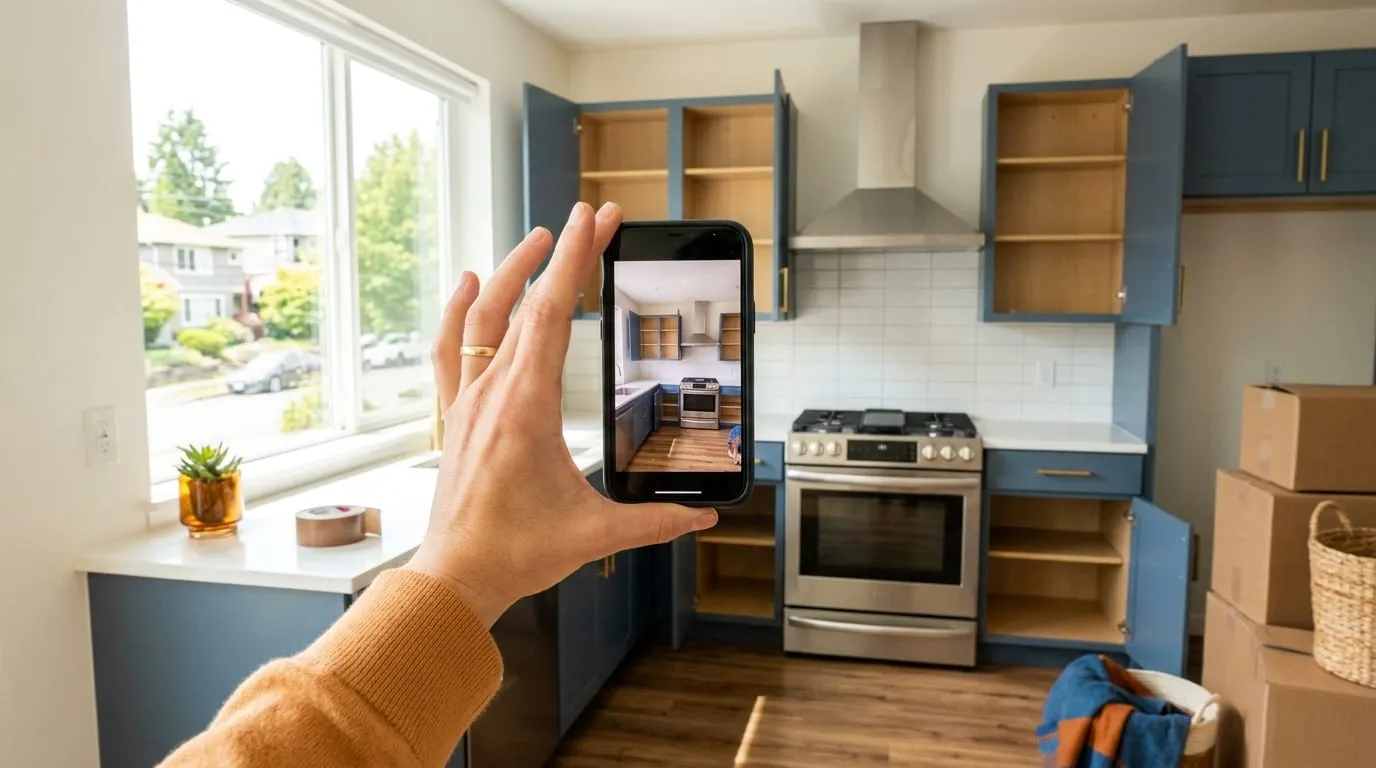
Good photos are your best protection against unfair charges and the best way to resolve a fair one quickly. The documentation guide covers camera settings and file naming; for a pet household, add these:
- Shoot low. Take photos at pet height: door bottoms, baseboards, lower walls, blind slats, and carpet edges.
- Photograph the carpet after it dries, with even light, including the areas in front of doors and along walls.
- Note odor in writing. Photos cannot capture smell. Write a dated note that you walked the unit and detected no pet odor, and ask the landlord or manager to note it too if you do a joint walkthrough.
- Keep receipts for any enzymatic cleaner or professional carpet treatment you used, with dates.
- Keep the yard photos, including the lawn and fence line.
- Match each photo to a checklist line, so a later charge can be compared against both.
An illustrative example: a two-bedroom with a cat and a dog
Consider a hypothetical tenant leaving a carpeted two-bedroom in Wallingford after two years, with a cat and a medium dog both allowed under the lease. The tenant paid a refundable pet deposit. The move-in checklist recorded “living room carpet: good, light wear at entry” and “bedroom 2 closet door: small scuffs at base.”
- The tenant boards the dog for the day and keeps the cat in the carrier in the finished bathroom.
- Hair comes out of heat registers, closet corners, and window tracks, then the carpet gets two slow vacuum passes and a rubber broom pass.
- A dried urine spot turns up behind where the sofa sat. The tenant extracts it with a wet vacuum, rinses with cool water, applies an enzymatic cleaner per the label, and leaves the window open overnight. No steam.
- The bedroom 2 closet door has new, deeper scratches next to the old scuffs. The tenant wipes the door, leaves the scratches as they are, and photographs them beside the checklist line.
- The yard gets scooped, two shallow holes are filled, and the litter box area in the laundry room is cleaned down to the baseboard.
- Final photos are taken at floor level in every room after the carpet dries.
In this scenario, the entry wear and the old closet scuffs are on the checklist. The urine spot, if any trace remains, and the new door scratches are what the landlord could reasonably document. The tenant cannot control the outcome, but has made sure everything else is clean and that the record is complete. If you are on the landlord side of a pet move-out, see the landlord move-out inspection guide.
Common questions
Can my landlord charge me for professional carpet cleaning just because I had a dog?
Not on that basis alone. RCW 59.18.280 says no part of a deposit may be withheld for carpet cleaning unless the landlord documents wear to the carpet beyond wear resulting from ordinary use. Having a pet is not documentation. A urine stain, lingering odor, or chewed edge that was not on the move-in checklist is the kind of condition a landlord could document.
Should I rent a carpet steam cleaner to get rid of pet urine smell before I leave?
Not for the urine spots themselves. The Carpet and Rug Institute says not to use a steam cleaner on urine spots because the heat sets the stain and the smell. Extract with a wet vacuum, rinse with cool water, and use an enzymatic pet cleaner per its label. For widespread odor, a carpet cleaning firm that handles pet stains is the better call.
Is a pet deposit refundable in Washington?
If it is a deposit, it is handled like any other deposit. RCW 59.18.285 says nonrefundable money may not be called a deposit, and a fee is nonrefundable only if a written rental agreement clearly says so. Read your lease to see whether you paid a refundable pet deposit, a nonrefundable pet fee, or both.
My cat scratched the bottom of a door. Is that normal wear?
Washington's statute does not answer that item by item. It bars charges for wear resulting from ordinary use and limits charges for partial damage to the cost of the damaged portion. Light marks may be argued either way; deep gouges through the finish are more likely to be treated as damage. Photograph it and compare it with the move-in checklist.
Sources and references
- RCW 59.18.280: Moneys paid as deposit or security for performance by tenant, statement and notice of basis for retention, remedies , Washington State Legislature Primary source Accessed November 15, 2026
- RCW 59.18.260: Moneys paid as deposit or security for performance by tenant, written rental agreement and checklist required , Washington State Legislature Primary source Accessed November 15, 2026
- RCW 59.18.130: Duties of tenant , Washington State Legislature Primary source Accessed November 15, 2026
- RCW 59.18.285: Nonrefundable fees not to be designated as deposit , Washington State Legislature Primary source Accessed November 15, 2026
- Move In Costs , City of Seattle, Renting in Seattle Primary source Accessed November 15, 2026
- Cleaning and Maintenance , The Carpet and Rug Institute Accessed November 15, 2026
- Allergic to Your Pet? Learn About Dog and Cat Allergies , Asthma and Allergy Foundation of America Accessed November 15, 2026
- Litter Box Problems , ASPCA Accessed November 15, 2026
- What to Do with Pet Waste , Seattle Public Utilities Primary source Accessed November 15, 2026
- Reduce the Risk of Lead Exposure at Home , US Environmental Protection Agency Primary source Accessed November 15, 2026
See something out of date or wrong? Tell the editors. Read how we work in our editorial policy.